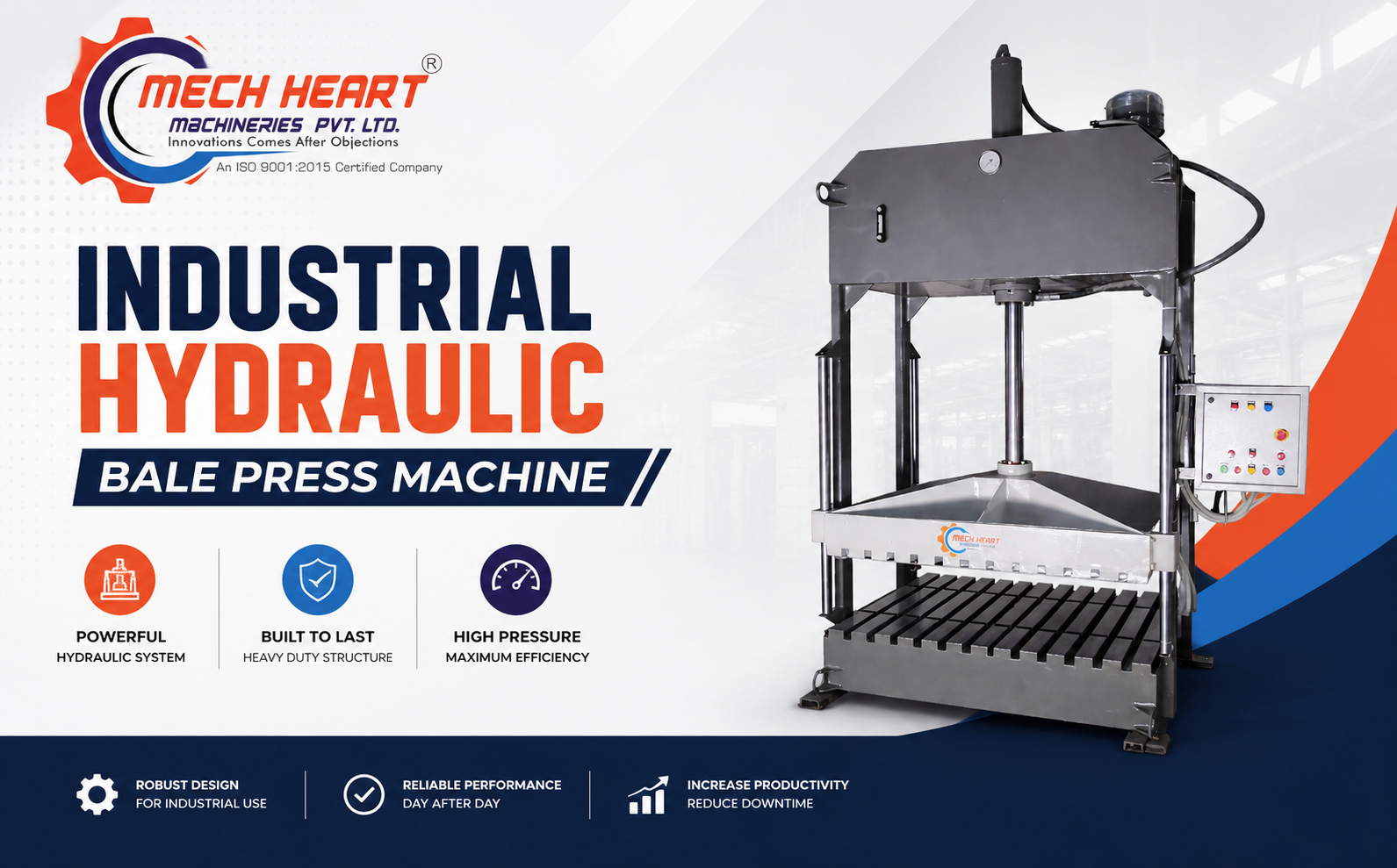
Industrial Hydaulic Bale Press Machine dryer
Discover efficient industrial hydraulic bale press machine dryers in Ahmedabad. Mech Heart offers reliable solutions for waste management and material compactio
Why This Matters in Ahmedabad
Ahmedabad, a bustling industrial hub in Gujarat, hosts a diverse range of manufacturing sectors, including textiles, chemicals, plastics, and packaging. Many of these industries generate significant volumes of waste materials, some of which may be wet or require pre-treatment. The presence of a robust manufacturing base means there's a constant demand for efficient waste management and material handling solutions. Companies in Ahmedabad are increasingly focused on operational efficiency, environmental compliance, and cost reduction, making advanced machinery like hydraulic bale press machine dryers a valuable investment for streamlining processes.
What is an Industrial Hydraulic Bale Press Machine Dryer — Overview
An industrial hydraulic bale press machine dryer is a sophisticated piece of equipment designed to perform two primary functions: drying and compacting materials into dense bales. It combines the powerful compression capabilities of a hydraulic baling press with an integrated drying system, typically utilizing hot air. This allows for the reduction of moisture content in materials like textile waste, agricultural by-products, or certain types of industrial refuse before or during the baling process. The result is a more stable, smaller, and easier-to-handle bale that is often more valuable for resale or more cost-effective for disposal.
Key Features and Technical Specifications
- Integrated Hot Air Drying System: Efficiently reduces moisture content in materials.
- Heavy-Duty Hydraulic Cylinder: Provides powerful and consistent compression force for dense bales.
- Robust Steel Construction: Ensures durability and longevity in demanding industrial environments.
- Adjustable Bale Size and Density Settings: Allows for customization based on material type and disposal requirements.
- Automated Operation Modes: Streamlines the baling and drying process for increased efficiency.
- Safety Interlocks and Emergency Stops: Guarantees operator safety during operation.
- User-Friendly Control Panel: Simplifies operation and monitoring of the machine's functions.
- Variable Temperature Control for Drying: Optimizes drying parameters for different materials.
Industrial Applications and Use Cases
- Textile Waste Management: Drying and baling wet fabric scraps, yarn waste, and production offcuts from garment factories.
- Agricultural By-product Processing: Compacting and drying materials like spent grains, husks, or certain types of biomass for easier storage or biofuel production.
- Food Processing Waste: Handling and drying organic waste from food manufacturing facilities before disposal or further processing.
- Paper and Pulp Industry: Baling wet paper sludge or rejected paper products after a drying phase.
- Plastic Recycling: Pre-treating and compacting certain types of plastic waste that may contain residual moisture.
- Woven Sack and FIBC Manufacturing: Managing and compacting production waste that might be damp.
- General Industrial Waste Reduction: Drying and baling various types of industrial refuse where moisture content is a concern.
How to Choose the Right Industrial Hydraulic Bale Press Machine Dryer
Selecting the appropriate industrial hydraulic bale press machine dryer is a critical decision that impacts operational efficiency and cost-effectiveness. Consider the following factors:
- Material Type and Volume: Understand the specific materials you need to process, their typical moisture content, and the volume of waste generated daily or weekly.
- Drying Capacity and Temperature Requirements: Ensure the dryer's capacity and temperature range are suitable for effectively drying your specific materials.
- Baling Force and Bale Size: The hydraulic force must be sufficient to achieve the desired bale density, and the bale dimensions should fit your storage and transportation constraints.
- Power Requirements and Utilities: Verify that your facility can support the machine's electrical and any other utility needs.
- Automation and Ease of Operation: Consider the level of automation desired and the ease with which your staff can operate and maintain the equipment.
- Supplier Reputation and After-Sales Support: Look for a manufacturer with a proven track record, reliable technical support, and readily available spare parts.
- Customization Options: Determine if the machine can be tailored to your unique operational needs or specific material characteristics.
- Safety Features: Prioritize machines equipped with comprehensive safety features to protect operators.
Quality Standards and Compliance
When investing in an industrial hydraulic bale press machine dryer, ensuring it meets stringent quality standards and relevant compliance regulations is paramount. Manufacturers should adhere to established engineering practices and material specifications to guarantee the machine's durability, safety, and performance. Look for equipment that is built in accordance with national and international standards, such as those set by the Bureau of Indian Standards (BIS) or ISO certifications for manufacturing processes. Verification of robust construction, reliable hydraulic systems, and effective safety mechanisms is essential. A supplier committed to quality will readily provide documentation and certifications to assure buyers of the machine's integrity and compliance with industry requirements.
Why Mech Heart's Experience and Capability Matters
Mech Heart Machineries Pvt. Ltd., established in 2020 and based in Vatva, Ahmedabad, brings a focused approach to manufacturing specialized industrial machinery. With over 8 years of experience specifically in woven sack packaging, raffia, and FIBC industries' baling solutions, the company possesses a deep understanding of the challenges faced in material compaction and waste management. This practical experience translates into machinery designed for real-world industrial demands.
Their manufacturing process emphasizes precision engineering and the use of quality components to ensure the reliability and longevity of their hydraulic bale press machine dryers. The technical capability of their team, combined with a commitment to customer satisfaction, allows them to offer solutions that are not only effective but also tailored to specific client needs. Mech Heart's dedication to quality control throughout the production cycle and their focus on providing dependable after-sales support are key differentiators for businesses seeking trustworthy and efficient industrial equipment in Ahmedabad and beyond.
Installation, Maintenance, and Care Tips
Proper installation, regular maintenance, and diligent care are crucial for maximizing the lifespan and performance of your industrial hydraulic bale press machine dryer.
Installation
Ensure the machine is installed on a level, stable surface capable of supporting its weight and operational vibrations. Connect all electrical and pneumatic lines according to the manufacturer's specifications and safety guidelines. A qualified technician should oversee the installation process.
Routine Maintenance:
- Hydraulic Fluid: Regularly check the hydraulic fluid level and quality. Top up or replace the fluid as recommended by the manufacturer, ensuring it's clean and free from contaminants.
- Lubrication: Lubricate all moving parts, including pivot points, cylinders, and guides, according to the maintenance schedule to prevent wear and ensure smooth operation.
- Filter Checks: Inspect and clean or replace hydraulic and air filters regularly to maintain system efficiency and prevent damage.
- Electrical Connections: Periodically check all electrical connections for tightness and signs of wear or corrosion.
- Safety Features: Test all safety interlocks, emergency stops, and guards to ensure they are functioning correctly before each operational shift.
Care Tips
- Cleanliness: Keep the machine and its surrounding area clean. Remove any accumulated debris or material that could interfere with operation or pose a safety hazard.
- Material Loading: Load materials evenly into the chamber to prevent uneven pressure distribution, which can stress the hydraulic system and affect bale quality.
- Overloading: Avoid overloading the machine beyond its specified capacity, as this can lead to premature wear or component failure.
- Operator Training: Ensure all operators are thoroughly trained on the machine's operation, safety procedures, and basic maintenance tasks.
- Prompt Repairs: Address any unusual noises, vibrations, or performance issues immediately. Do not operate the machine if it is malfunctioning.
Frequently Asked Questions
This machine is designed for various industrial and agricultural materials that contain moisture, such as textile scraps, agricultural by-products, certain types of sludge, and other organic waste. The effectiveness of drying depends on the material's composition and initial moisture level.
The machine typically uses a hot air circulation system to dry the material within the chamber before or during the compression cycle. This reduces moisture content, making the material easier to bale and resulting in a more stable final product.
The achievable bale density depends on the hydraulic force of the press, the type of material being baled, and the degree of compaction. High-density bales are generally produced to optimize storage and transportation efficiency.
Yes, industrial hydraulic bale press machine dryers are equipped with essential safety features such as emergency stop buttons, safety interlocks on doors and access points, and robust guarding to protect operators from moving parts.
Regular maintenance of the hydraulic system includes checking and maintaining the hydraulic fluid level and quality, inspecting hydraulic lines for leaks, and ensuring filters are clean. Following the manufacturer's recommended service intervals is crucial.
Many manufacturers, including Mech Heart, offer customization options. This can include adjusting bale dimensions, modifying drying parameters, or integrating specific features to better suit unique material types or operational workflows.
Conclusion
For industries in Ahmedabad and surrounding regions grappling with the challenge of managing moist waste materials, an industrial hydraulic bale press machine dryer offers a powerful and efficient solution. By combining effective drying capabilities with robust hydraulic compression, these machines streamline operations, reduce waste volume, and prepare materials for more economical handling. When selecting such equipment, prioritizing quality construction, appropriate technical specifications, reliable after-sales support, and a manufacturer with relevant industry experience, like Mech Heart Machineries Pvt. Ltd., is key to ensuring a wise and productive investment for your business.
Get In Touch
Mech Heart Machines Pvt. Ltd.