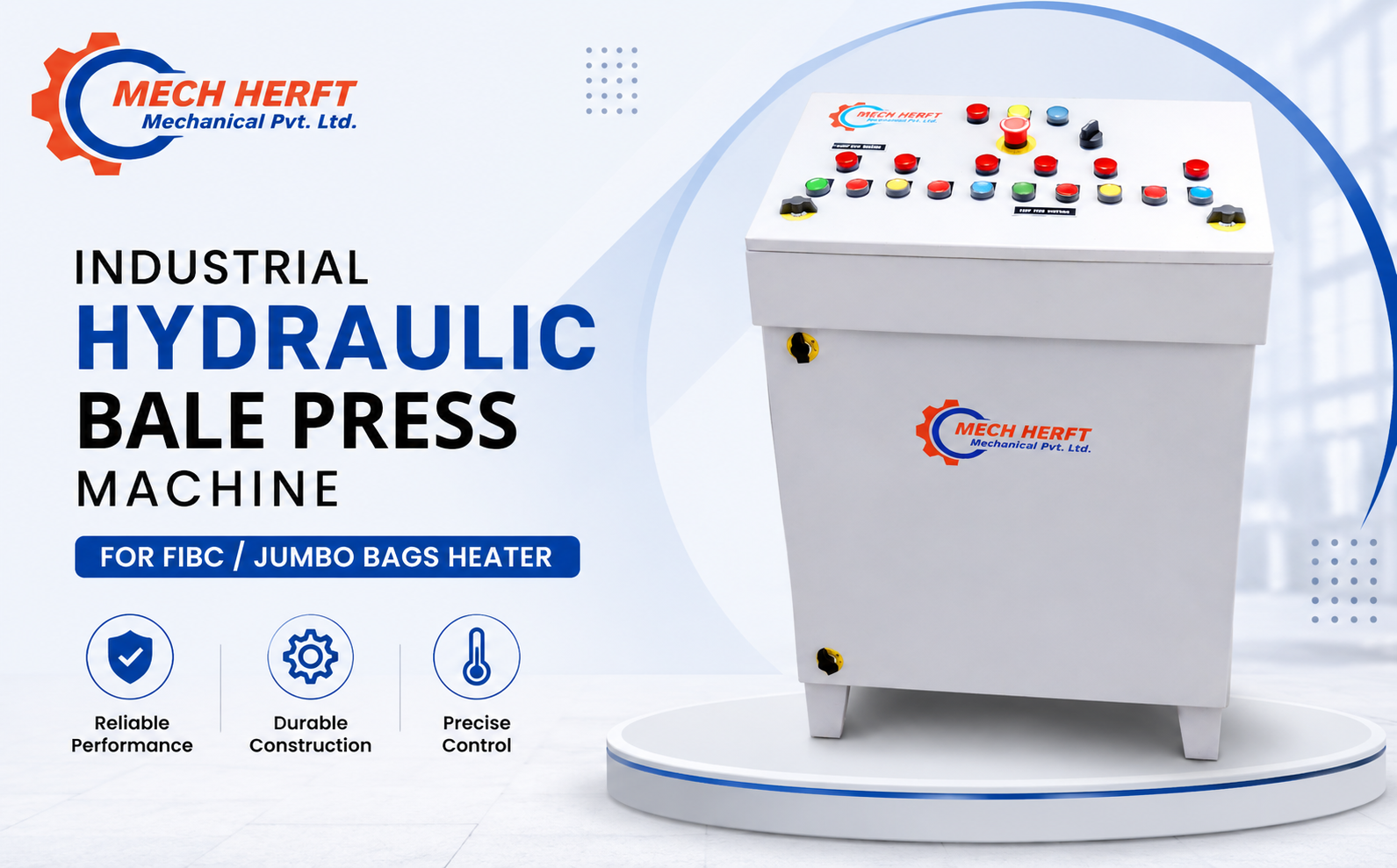
Industrial Hydaulic Bale Press Machine for FIBC / Jumbo Bags Heater
Optimize waste management for FIBC and jumbo bags with a robust industrial hydraulic bale press machine. Enhance efficiency and storage in Ahmedabad.
Why This Matters in Ahmedabad
Ahmedabad, a major industrial hub, hosts a diverse range of manufacturing sectors, including textiles, chemicals, plastics, and packaging. These industries frequently utilize FIBCs and jumbo bags for raw material handling and product distribution. The resulting accumulation of empty or damaged bags necessitates effective waste management strategies. Implementing an industrial hydraulic bale press machine in Ahmedabad facilities helps businesses comply with environmental regulations, optimize their footprint, and streamline material handling processes across the region's busy industrial zones like GIDC Vatva.
What is an Industrial Hydraulic Bale Press Machine — Overview
An industrial hydraulic bale press machine is a heavy-duty compaction system designed to reduce the volume of various materials, including FIBCs and jumbo bags. It operates by utilizing hydraulic power to exert immense pressure on the material, compressing it into dense, manageable bales. This process significantly decreases the original volume, making the material easier to store, transport, and potentially recycle. Such machines are fundamental for efficient waste management and material recovery in high-volume industrial settings.
Key Features and Technical Specifications
- High Compaction Capacity: Available in capacities ranging from 100 to 200 tons, ensuring effective volume reduction for diverse material densities.
- Robust Structural Design: Main structure plates up to 25mm thick and cylinder mounting plates up to 40mm, supported by 150x150x5mm box section pillars, provide exceptional durability.
- Optimized Bale Dimensions: Produces consistent bale sizes of 1150 x 950 x 600 mm, facilitating standardized storage and transport.
- Precision Hydraulic System: Features hydraulic vane pumps (Veljan brand) with outputs from 300+50 LPM to 450+50 LPM, ensuring reliable and powerful pressing.
- Efficient Cycle Time: Achieves a rapid cycle time of 40-45 seconds, supporting high-throughput operations.
- User-Friendly Control System: Equipped with a panel-based control system for intuitive operation, including start, stop, up, down, and emergency functions.
- Quality Electrical Components: Integrates main motors from Bharat Bijli or Crompton (20 HP to 30 HP) and Hydrank direction control valves, ensuring dependable electrical performance.
- Durable Finish: Each machine receives two primer coats and two paint coats in a standard deep orange color for enhanced protection and longevity.
Industrial Applications and Use Cases
- FIBC Manufacturing Units: Compacting off-spec or waste FIBCs generated during production.
- Chemical and Fertilizer Plants: Baling used jumbo bags that contained raw materials or finished products.
- Plastic Recycling Facilities: Processing woven polypropylene sacks and other plastic packaging materials for recycling.
- Food Processing Industries: Managing bulk packaging waste from ingredients delivered in large bags.
- Logistics and Warehousing: Reducing the volume of empty bags after material offloading, freeing up storage space.
- Construction Material Suppliers: Compacting used cement bags or other bulk material packaging.
- Textile Mills: Handling large quantities of fabric waste or raw material bags.
How to Choose the Right Industrial Hydraulic Bale Press Machine
Selecting the appropriate industrial hydraulic bale press machine requires careful consideration of several factors to ensure it meets specific operational demands.
- Capacity Requirements: Assess the daily volume and type of FIBCs or jumbo bags to be processed to determine the necessary tonnage (e.g., 100, 120, 150, or 200 tons).
- Material Compatibility: Verify that the machine is designed to effectively press woven bags, jumbo bags, and FIBC bags without issues.
- Hydraulic System Quality: Examine the specifications of the hydraulic pump, cylinders, and valves, as these components are critical for sustained performance and pressure.
- Structural Integrity: Review the thickness of main plates, cylinder mounting plates, and pillar dimensions to ensure the machine's long-term durability under heavy loads.
- Safety Features: Confirm the presence of essential safety mechanisms like emergency stops, limit switches, and protective guarding to ensure operator safety.
- Supplier Experience and Support: Choose a supplier with a proven track record in manufacturing industrial machinery and offering reliable after-sales service, including spare parts and technical assistance.
- Customization Options: Inquire about the possibility of customizing features such as bale size, platform dimensions, or control system integration to fit unique facility layouts or operational workflows.
Quality Standards and Compliance
Adherence to quality standards is paramount for industrial machinery, especially for equipment like hydraulic bale presses that operate under high pressure. Buyers should verify that the manufacturing process follows recognized quality management systems, such as ISO standards, which indicate a commitment to consistent quality. Components like motors, pumps, and valves should be sourced from reputable brands known for their reliability and compliance with relevant electrical and hydraulic standards. Structural materials must meet specific Indian Standards (IS) for steel and fabrication to ensure the machine's integrity and safe operation. A thorough review of material certifications and component specifications is a prudent step before procurement.
Why Company Experience and Capability Matters
The performance and longevity of an industrial hydraulic bale press machine are directly linked to the manufacturer's experience and technical capability. Mech Heart Machines Pvt. Ltd., operating from GIDC Vatva, Ahmedabad, focuses on delivering robust industrial machinery engineered for demanding environments. Our manufacturing process emphasizes structural integrity, utilizing specified plate thicknesses and pillar dimensions to ensure machine stability and durability. The technical team possesses the expertise to integrate reliable hydraulic and electrical components from established brands like Veljan, Bharat Bijli/Crompton, and Hydrank. This approach ensures consistent bale quality and operational efficiency. We also prioritize customization capabilities, allowing for adaptations to platform size or control systems to align with specific client requirements. Our commitment extends to providing dependable delivery and after-sales support, ensuring that our machines continue to perform effectively throughout their operational life.
Installation, Maintenance and Care Tips
Proper installation and routine maintenance are crucial for the safe and efficient operation of an industrial hydraulic bale press machine.
- Site Preparation: Ensure the installation site has a level, reinforced concrete foundation capable of supporting the machine's weight and operational forces. Adequate space for material loading, baling, and bale removal is also necessary.
- Power Supply: Verify that the electrical supply matches the machine's requirements (e.g., 440V, 50 Hz) and that appropriate circuit breakers and safety disconnects are in place.
- Hydraulic Fluid Management: Regularly check the hydraulic oil level and quality. Use only the specified grade (e.g., Grade 68 No.) and adhere to recommended oil change intervals to prevent system wear and maintain performance.
- Lubrication: Follow the manufacturer's guidelines for lubricating moving parts, such as guide rods and cylinder pivot points, to minimize friction and extend component life.
- Component Inspection: Periodically inspect all hydraulic hoses, fittings, electrical connections, and structural welds for any signs of wear, leaks, or damage. Address any issues promptly to prevent larger failures.
- Safety System Checks: Regularly test emergency stop buttons, limit switches, and safety interlocks to ensure they are fully functional and provide immediate machine shutdown when activated.
- Cleanliness: Keep the machine and surrounding area clean to prevent dust and debris from entering hydraulic or electrical components, which can lead to malfunctions.
Frequently Asked Questions
An industrial hydraulic bale press machine is specifically engineered to process various bulk packaging materials. This includes Flexible Intermediate Bulk Containers (FIBCs), commonly known as jumbo bags, and other woven sacks made from materials like polypropylene. The machine's high compaction force effectively reduces the volume of these often bulky and difficult-to-manage industrial residues.
Baling FIBCs and jumbo bags offers several key operational advantages. It significantly reduces the material's volume, leading to substantial savings in storage space within a facility. This compaction also lowers transportation costs by allowing more material to be shipped per load. Furthermore, baling streamlines waste management processes and can facilitate easier recycling or disposal.
A hydraulic bale press machine functions by using a powerful hydraulic cylinder to compress materials. An electric motor drives a hydraulic pump, which pressurizes hydraulic fluid. This fluid then actuates the cylinder's ram, pushing it down onto the material loaded into the press chamber. The material is compacted into a dense bale, which is then typically secured and ejected.
Industrial hydraulic bale press machines incorporate several safety features to protect operators. These commonly include emergency stop buttons that immediately halt all machine functions, limit switches to prevent over-travel of the ram, and safety interlocks on access doors. Robust guarding around moving parts and clear operational controls also contribute to a safer working environment.
A regular maintenance schedule is essential for the longevity and performance of a bale press. This typically involves daily checks of hydraulic oil levels and visual inspections for leaks. Weekly tasks might include lubricating moving parts and cleaning the machine. More extensive monthly or quarterly maintenance involves checking electrical connections, testing safety features, and inspecting structural components for wear.
Yes, industrial hydraulic bale press machines can often be customized to meet unique operational needs. Customization options might include adjusting the platform size or bale dimensions to accommodate specific material types or facility layouts. Control systems can also be integrated with existing plant automation, and the overall capacity can be selected from a range of tonnage options.
Conclusion
Efficient management of FIBCs and jumbo bags is a critical aspect of modern industrial operations, directly impacting space utilization, logistics costs, and environmental compliance. An industrial hydraulic bale press machine provides a robust and reliable solution for this challenge, transforming bulky waste into compact, manageable bales. When considering such an investment, evaluating machine specifications, understanding quality standards, and partnering with an experienced manufacturer are crucial steps. A well-chosen machine not only streamlines waste processes but also contributes to a more organized and cost-effective operational environment.
Get In Touch
Mech Heart Machines Pvt. Ltd.